
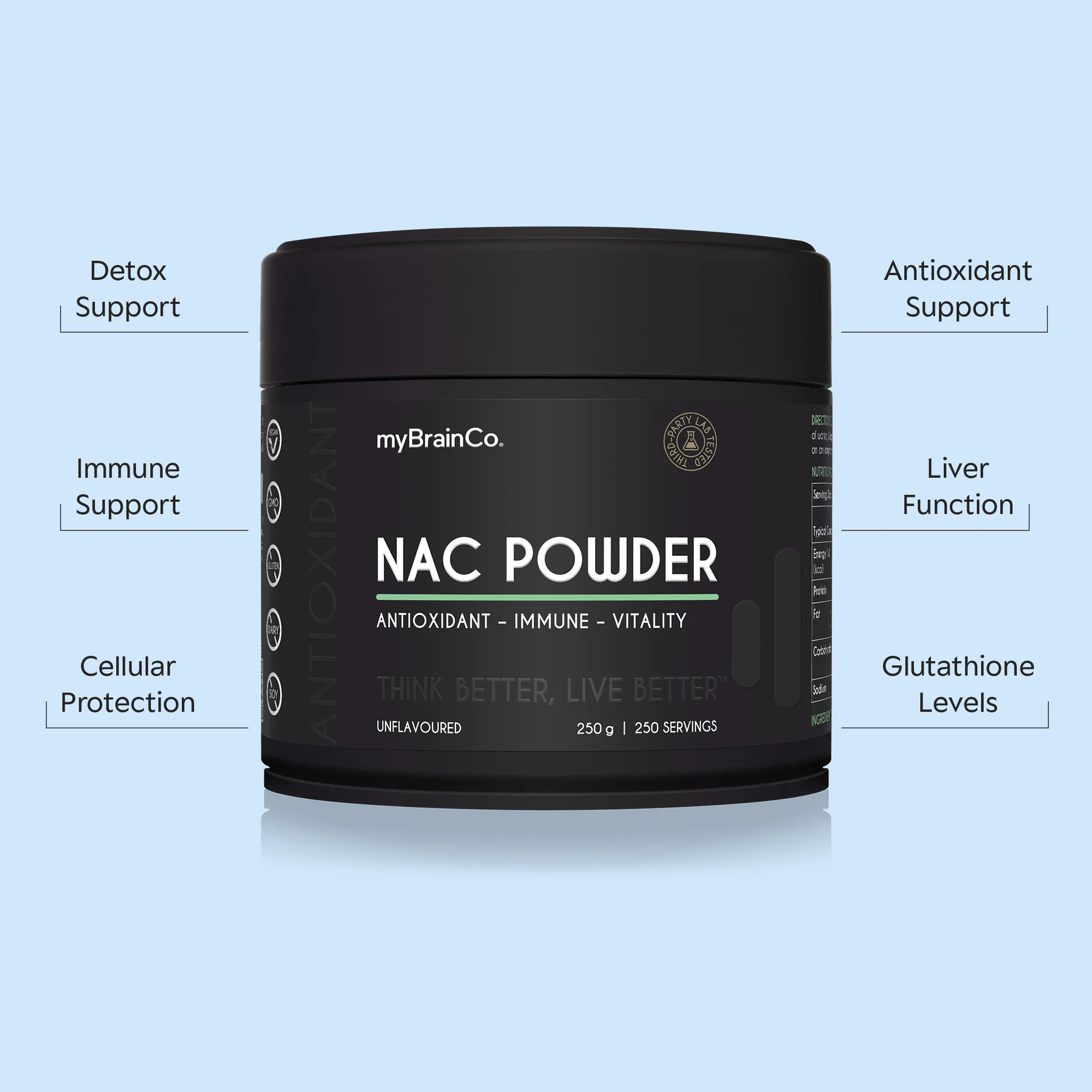

MyBrainCo 250g Pure NAC
$38.80

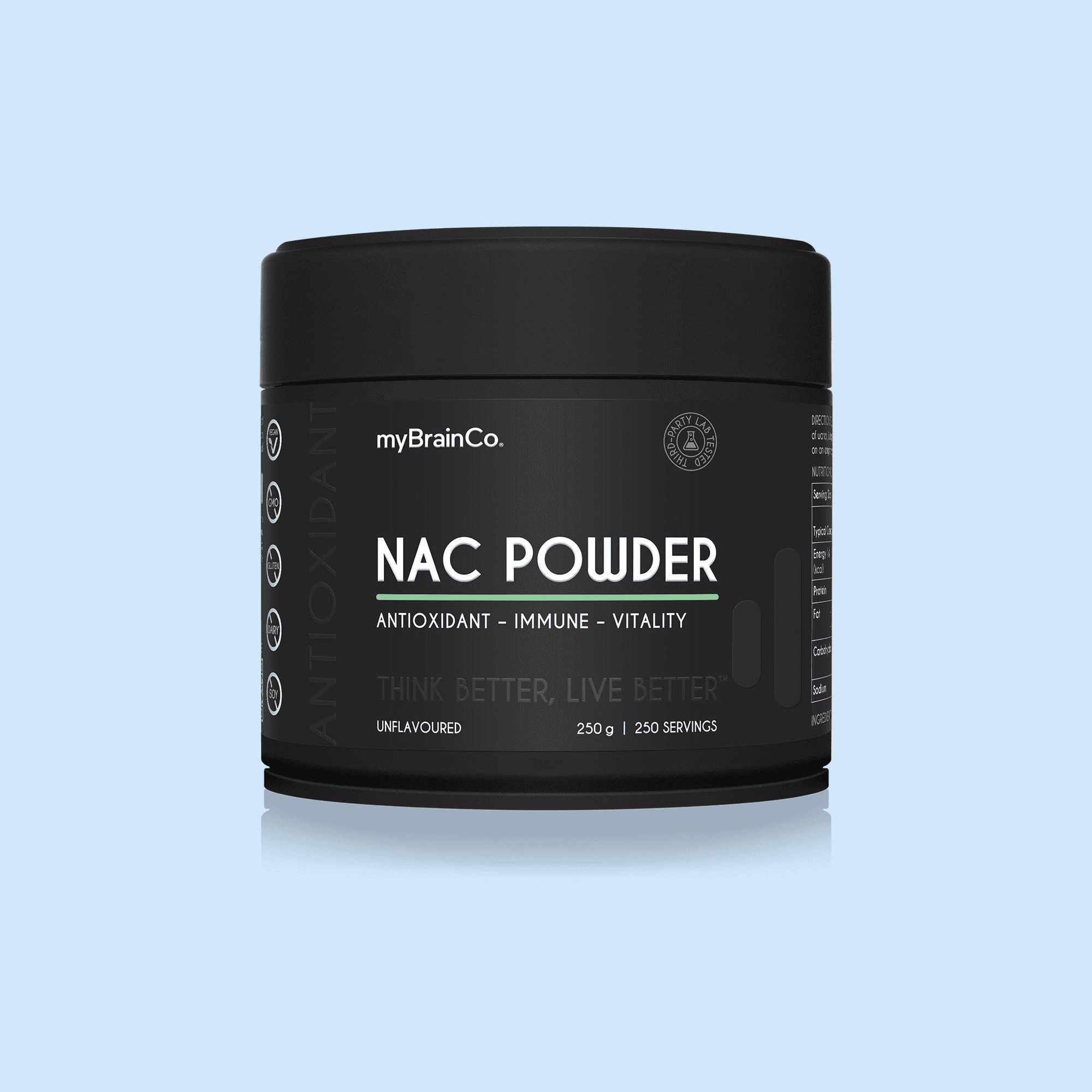
Amino acid supplement: N-Acetyl-Cysteine (NAC) in pharmaceutical-grade powder form.
myBrainCo pure NAC with 99.9% purity, independently HPLC-tested and Australian-packed. Powder form mixes into water or juice, with 250 servings per tub.
Out of stock
What is MyBrainCo Pure NAC and who is it for?
NAC (N-Acetyl-Cysteine) is a sulphur-containing amino acid derivative that serves as a precursor to cysteine and, in turn, to glutathione, one of the body’s primary endogenous antioxidants. This 250g powder format delivers 1g of pharmaceutical-grade NAC per serve, with 250 servings per bag, making it a practical option for those who prefer powder over capsules or who want to manage their dose more flexibly.
This product suits people who are already familiar with NAC and want a clean, high-purity, cost-effective format. The powder is sourced from cGMP and ISO 9001-certified manufacturers, independently tested for purity and heavy metals at an APVMA-licensed Australian laboratory, and packaged locally. Worth noting: NAC has a naturally sulphurous, slightly sharp taste, so mixing into juice or a flavoured drink is the most practical approach.
Fairfield Nutrition Thoughts
NAC sits in an interesting position in the supplement landscape. It’s been used clinically for decades, most notably in hospital settings as an antidote for paracetamol overdose, and its role as a glutathione precursor is well-established biochemistry rather than speculative. For practitioners working with people who want to support their antioxidant systems, particularly those with higher oxidative load from lifestyle, environment, or medication use, NAC is a logical and evidence-grounded choice.
Why This Formulation / How It Works
Most NAC products come in capsule form, which works well but limits flexibility around dose. This powder format delivers 1g per serve and gives you 250 servings per bag, making it significantly more economical per gram than capsule equivalents. The purity is 99.9% pharmaceutical-grade, independently verified by HPLC testing at an APVMA-licensed Australian laboratory, with additional testing for heavy metals, microbials, and moulds. There are no fillers, excipients, or flow agents, just NAC.
The manufacturing chain is transparent: sourced from cGMP, ISO 9001, and FSSC 22000-certified global partners, with final packaging in a cGMP-certified Australian facility. For practitioners or individuals who want to verify what they’re putting in their body, the documentation trail here is solid.
Role as a Glutathione Precursor
NAC provides cysteine, which is the rate-limiting substrate in glutathione synthesis. Glutathione is a tripeptide (glutamate, cysteine, glycine) produced in cells and concentrated particularly in liver tissue. Because cysteine availability is the bottleneck in this synthesis pathway, supplementing with NAC is a more stable and bioavailable way to support glutathione production than supplementing with cysteine directly.
Antioxidant Activity
Beyond its role as a glutathione precursor, NAC itself provides direct antioxidant activity through its free thiol (sulphydryl) group, which can neutralise reactive oxygen species. This dual contribution, both as a substrate for glutathione synthesis and as a direct antioxidant compound, is what makes NAC particularly well-regarded in contexts where antioxidant capacity is a priority.
When to Consider This
This product provides nutritional support for antioxidant pathways. It makes sense if you’re:
- Working with a practitioner on a broader antioxidant or liver wellness protocol and want a cost-effective, high-purity NAC source.
- In a life stage or situation where glutathione demand may be higher, such as regular intense exercise, significant environmental or occupational exposures, or periods of dietary stress.
- Already familiar with NAC and prefer a powder format for dose flexibility or value.
Supplement strategy: NAC is commonly introduced after foundational antioxidant support, such as dietary changes and basic nutritional supplements, is established. It’s often used alongside other compounds involved in glutathione metabolism, such as glycine or selenium, though it works as a standalone supplement. Many people use it for defined periods rather than indefinitely, and dosing is typically reviewed with a practitioner over time.
⚠️ Not suitable for: Children under 15 years of age, pregnant or breastfeeding women.
How to Use
The manufacturer’s recommended dose is 2 scoops (approximately 1g) blended into 150-200ml of water, juice, or a liquid of your choice. For best results, take on an empty stomach, either first thing in the morning or between meals. If you experience any digestive sensitivity, taking it with a small amount of food is a reasonable adjustment.
NAC has a naturally sulphurous, slightly sharp taste. Mixing into juice or a flavoured drink makes it considerably more palatable. Use a dry spoon each time, reseal the bag after use, and consume within 150 days of opening. Store below 25°C in a cool, dry place away from direct sunlight.
Ingredients
Per serving (1g / 2 scoops):
N-Acetyl-Cysteine (NAC) 1g
Other ingredients: Nil. Single-ingredient formula.
Allergen information: Free from gluten, dairy, lactose, peanut, soy, and egg. Vegan and GMO-free.
Common Questions
What does NAC actually taste like?
It has a distinctly sulphurous, slightly sharp and tangy flavour, which some people find strong. Mixing into juice or a flavoured drink masks it well. If taste is a real barrier, a capsule form of NAC may suit you better.
Can I take this with my medications?
NAC may interact with certain medications, particularly those metabolised through liver pathways. It’s worth discussing with your healthcare professional before starting, especially if you’re on prescription medications.
How does this compare to taking glutathione directly?
Oral glutathione has absorption challenges, as it’s a large molecule that can be broken down in the digestive tract before reaching cells. NAC provides cysteine, the rate-limiting building block for the body’s own glutathione production within cells, which many practitioners consider a more reliable approach. Liposomal glutathione is an alternative that addresses the absorption issue, but NAC remains a well-established and cost-effective option.
Is 1g per day the right dose for everyone?
The 1g daily dose in this product is a common starting point and falls within the range used in research. Some practitioners work with different doses depending on the individual context. If you’re unsure what’s appropriate for your situation, it’s worth checking with a practitioner before adjusting.
Warnings & Storage
Do not use if: You are pregnant, breastfeeding, or under 15 years of age.
Cautions: Consult your healthcare professional before use if you are taking any prescription medications, have a medical condition, or are planning surgery. Not a sole source of nutrition. Do not eat the contents of the freshness packet.
Storage: Store below 25°C in a cool, dry place away from direct sunlight and heat. Always use a dry spoon. Reseal after each use. Consume within 150 days of opening.
Always consult your healthcare professional before use if you have any pre-existing conditions or are taking medications.
| Weight | 0.39 kg |
|---|---|
| Dimensions | 6 × 6 × 10 cm |
| GTIN | 9.35E+12 |