Histamine Intolerance and Support Australia
This category brings together supplements that are commonly used in practice when people notice heightened reactivity to foods, environments, or internal stressors, often alongside broader inflammatory or nervous system patterns. Often searched for as “histamine intolerance” support, this category includes supplements selected to support how the body manages histamine and reactivity broadly, and not to address a single condition.
Histamine reactivity is best understood as a pattern rather than a diagnosis. It commonly overlaps with digestion, immune signalling, skin or airway sensitivity, and nervous system regulation. For that reason, this category is usually considered once more basic foundations are reasonably established, rather than as an entry point.
If you’re unsure how this category fits, Supplement Strategy 101 outlines how we think about sequencing, foundations, and targeted support, and why selecting the right type of support is often more important than adding more products.
When is histamine reactivity support beneficial?
Targeted support 
Support in this category is often considered when someone already eats relatively well and has addressed obvious digestive issues, but continues to notice heightened or disproportionate reactions to everyday inputs that don’t seem to affect others in the same way.
People frequently describe this pattern as feeling “reactive” or “overstimulated” in their body. This can include flushing, itching, headaches, digestive discomfort, a racing or unsettled feeling, disturbed sleep, or feeling wired after certain foods, alcohol, stress, or environmental exposures. These experiences can fluctuate from day to day and don’t always follow a clear or predictable trigger.
Where sleep, stress load, or digestion are clearly unstable, histamine reactivity is often a downstream signal rather than the primary issue. In those situations, addressing more foundational factors first can improve overall stability, with histamine-focused support becoming more relevant later.






A different way of thinking about histamine reactivity
Histamine is a normal and necessary signalling molecule involved in digestion, immune communication, and alertness. Challenges tend to arise when there is an imbalance between how much histamine is being released, how effectively it is broken down, and how sensitive the system is overall.
This helps explain why histamine reactivity can feel inconsistent. A food or situation may be tolerated one day and provoke a reaction the next. Factors such as stress, poor sleep, inflammation, infections, and gut health can all influence this balance, sometimes quite quickly.
Rather than approaching histamine reactivity as a single problem with a single solution, support in this category is usually more effective when matched to the dominant pattern being experienced.
Different support approaches within this category
Supporting histamine breakdown
Some products in this category are selected when reactions appear closely linked to eating, particularly higher-histamine or fermented foods, leftovers, or alcohol. People often notice symptoms that arise during or shortly after meals, or that become more noticeable as food variety narrows.
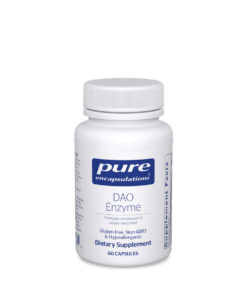
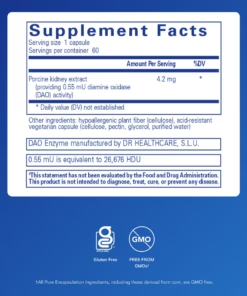
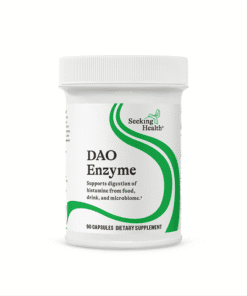
This category includes DAO Enzymes which breakdown histamine in the gut.
These products are typically used to support the body’s natural histamine breakdown processes, often in a situational way around meals or known triggers rather than as a continuous, long-term input. This approach tends to make the most sense when food-related reactions are the clearest and most consistent feature.
Supporting tolerance and buffering
Other products are considered when reactivity feels broader or less predictable, and is clearly influenced by stress, inflammation, or nervous system load. In this pattern, many different inputs can contribute, including foods, heat, exercise, poor sleep, or emotional stress.
Rather than focusing directly on histamine itself, these formulations are usually chosen to support overall tolerance and stability, helping reduce how easily the system becomes activated across multiple triggers.
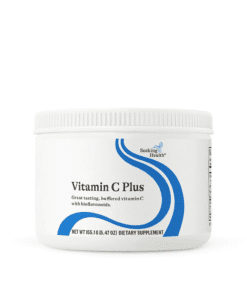
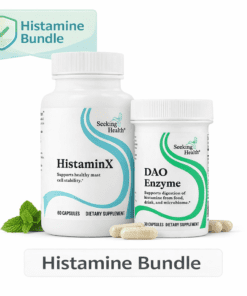
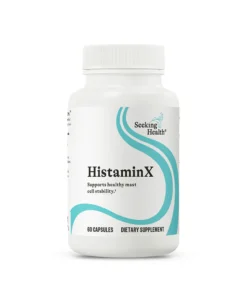
This category includes Seeking Health HistaminX
If in doubt our Histamine Support Bundle which combines Seeking Health HistaminX and DAO enzymes, is a great place to start
Supporting underlying nutrient requirements
Some formulations focus on providing nutrients involved in histamine handling, immune balance, and barrier function. This approach is often considered when dietary intake is restricted, appetite is low, or food tolerance has narrowed over time.
Nutrient-focused support is generally used as a complement to one other approach, rather than as a stand-alone strategy.
This category includes Seeking Health Histamine Nutrients
In practice, only one of these approaches is usually explored at a time, although they can be combined. Starting with just one allows responses to be observed more clearly and adjustments made based on individual responses rather than assumption.
How to choose between brands
Histamine reactivity support products at Fairfield Nutrition are selected from practitioner-used ranges. Each brand approaches formulation differently, which influences how and when products are typically chosen.
- Seeking Health — formulations focused on specific biochemical and nutrient pathways.
- Pure Encapsulations — conservative, low-excipient options often chosen when sensitivity is a consideration.
- Omne Diem — formulations centred on supporting histamine breakdown within the digestive tract.
- Researched Nutritionals — targeted blends such as Histaquel, typically selected with a clear rationale rather than broad use.
For more detail on formulation philosophy and product range, individual brand pages provide additional context.
Why shop histamine reactivity support at Fairfield Nutrition
This is a deliberately selective category, targeting histamine overload where it is likely. If histamine overload or histamine intolerance is not suspected, then it is recommended to start elsewhere with supplementation
All products are stocked locally in Australia and dispatched from Melbourne, with attention to appropriate storage and handling.
Products in this category are shown below: